Frotteuristic Disorder

Frotteuristic disorder is characterized by a pattern of frequent and intense sexual excitement triggered by fantasies, desires, or behaviors that involve rubbing or caressing someone who is not consenting.
Someone who is aroused by grinding against an unconsenting person, typically in a public place, may have the sexual dysfunction known as frotteuristic disorder.
What is frotteuristic disorder?
Sexual excitement, also referred to as sexual arousal, that arises from touching or rubbing against a non-consenting individual, typically a stranger, constitutes a primary characteristic of Frotteuristic disorder.
In frotteuristic disorder, Sexual desire in the perpetrator can be triggered by both genital and non-genital contact, which can sometimes result in an orgasm.
What is frotteuristic disorder in psychology?
One kind of paraphilia is frottage disorder. The definition of the French word “frotter” is “to obtrude or employ pressure on someone.”
The term now refers to experiencing intense sexual excitement by rubbing or touching the genital area against an unwilling person’s body.
The prospect of being caught in public seems to be exhilarating in some way. Crowded public areas, such as buses, elevators, subways, and sporting events, are common sites for frotteuristic disorder. Although there have been cases of individuals of any gender touching another person of any gender, the majority of these incidents involve men touching women.
Prevalence:
In frotteuristic disorder the majority of people view frottism and other paraphilia’s as deviations from healthy sexual thoughts and behaviors. They are frequently connected to traumatic events in childhood and the development of a distorted perception of sex and romantic relationships. The DSM-5 estimates that between 10% and 30% of adult men have frotteuristic disorder, which is rare but not unusual.
Though it can happen at any age, young men between the ages of 15 and 25 who appear to be bashful are more likely to have the issue.
Furthermore, it has been observed in older men who are quiet and socially distant. It is thought that women rarely experience the frotteuristic disorder.
It is believed that frotteuristic disorder is uncommon among women. Although the frequency of frotteuristic disorder is unknown, 10–14% of adult males who receive medical treatment for paraphilic disorders also fit the criteria for the frotteuristic disorder.

Symptoms:
The main indicator for frotteuristic disorder is when someone experiences regular and extreme sexual excitement as a result of touching or rubbing against someone who has not given their consent, as seen by their fantasies, impulses, or behavior. Due to the peculiar emphasis of their sexual desire, someone with frotteuristic illness may feel humiliated and distressed, and they are often just able to become aroused by fantasizing about or engaging in inappropriate physical contact.
To be diagnosed with frotteuristic disorder, a person needs to exhibit the following symptoms. Fancies, desires, or frotting for at least six months.
Sexual urges or fantasies that are clinically significant enough to cause distress or interfere with important aspects of daily life, such as work or social interactions, or that have been acted upon with someone who did not give their consent.
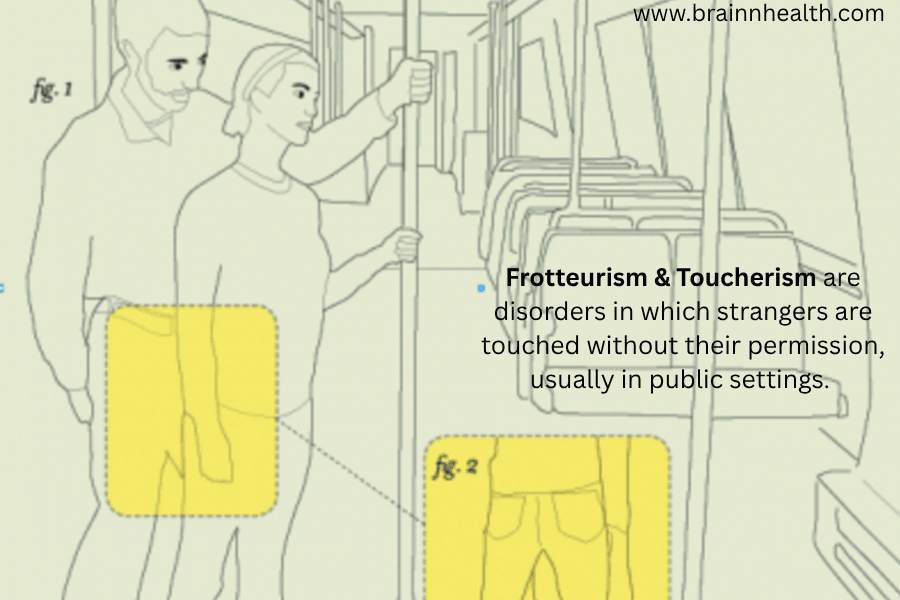
Frotteurism and toucherism are distinct concepts. When a member of a crowd touches or rubs their hands against the breasts, buttocks, or genital region of an unwilling person, the victim experiences sexual excitement.
What is the difference between toucherism and frotteurism?
Although they are not listed in the DSM-5, toucherism and frotteurism are quite similar ideas. In both situations, people are touched without their consent, generally in public. As opposed to frotteurism, which is touching someone else’s breasts, buttocks, or genitalia without that person’s permission, eroding one’s pelvic girdle against another is known as toucherism.
Sexual pleasure is associated with stroking or rubbing someone’s skin, hair, clothes, leather, or fur, according to hyphephilia, a kind of toucherism.
Causes:
Unintentional touch that causes sexual arousal in adolescence or childhood may lead to frotteuristic ideas in adulthood, according to certain specialists. Although children and adolescents may touch or rub against reluctant partners, sexual motivation is often less apparent, and frotteuristic illness is rarely identified until late adolescence or adulthood.
While a causal link has not been established, both hyper sexuality and antisocial conduct have been associated with frotteuristic illness. Depression, anxiety, low self-esteem, and frotteuristic disorders are interrelated.
People with frotteuristic disorder often have difficulty finding a loving or sexual partner who gives their consent and are frequently socially isolated.
Frotteuristic disorder cannot be correctly diagnosed unless a person displays frotteistic thoughts, urges, or behaviors outside of intoxication, even if substance abuse, particularly stimulant usage like cocaine and amphetamines, can cause frotteistic episodes.
Sexual abuse in childhood or anxiety disorders can impede a person’s psychosexual development. For those who have this condition, interacting with a stranger might feel like foreplay and intimacy.
Treatment:
Treatment of frotteuristic disorder is necessary when there is immoral or illegal behavior and/or the sexual urges lead to significant distress or impairment. The most popular kind of treatment for individuals in need is psychotherapy. When used in conjunction with treatment, certain drugs can lessen the compulsive behavior linked to the frotteuristic disorder.
- Selective serotonin reuptake inhibitors (SSRIs)
- Antiandrogens
- Cognitive behavior therapy
- Sex therapy
- Psychotherapy (individual or group)
What effects does frotteurism have on the mind?
Even if never acted on, a frotteuristic desire can still disturb the person experiencing it. The victim of acts of frotteurism, a form of sexual assault, may experience immediate or chronic trauma and extreme mental distress.
What are frotteurism’s legal repercussions?
The majority of jurisdictions have rules prohibiting Rottweilers. A person is breaching the law when they indulge their frottistic sexual cravings without getting permission from another person.

The punishment may range from humiliation to a fine, imprisonment, required mental health care, and perhaps even registration as a sex offender, depending on where you live.
Story:
Sarah was thirty years old and took the train to work every day. One morning, a man touched her, waking her up. At first, she thought it was an accident, but as the train staggered forward, she realized he had intentionally rubbed against her.
Sarah moved to another car, uncomfortable and violated. The experience, however, shocked her. She later learned that this behavior is typical of Frotteuristic Disorder, a mental illness in which people who have it enjoy rubbing or caressing non-consenting people in public.
The train authorities increased security after Sarah told them about the incident in order to prevent similar incidents in the future. The fact that something had been done made her feel better. However, she grew increasingly cautious in crowded places as a consequence of the incident.
People who suffer from frotteuristic disorder may experience a great deal of distress. It’s critical to identify the warning signs and take appropriate action to prevent such circumstances. By doing this, we can make the environment safer for everyone.
You must get professional assistance if you or someone you know is dealing with comparable problems. There are resources available for anyone affected by this disorder.