Disinhibited Social Engagement Disorder

Disinhibited social engagement disorder is one of two childhood attachment disorder that might create when a youngster needs proper nurturing and fondness from guardians for quite a few reasons. Because of these unfulfilled requirements, the kid isn’t firmly clung to guardians and is as alright with outsiders as they are with their essential parental figures.
Disinhibited social engagement disorder is, a type of act in which a child effectively approaches and cooperate with unfamiliar adults and shows at least two of the consecutive:
Disinhibited social engagement disorder is a disorder in which child has reduced or vanished hesitation in approaching and cooperating with unfamiliar adults.
Disinhibited social engagement disorder is a disorder in which a child has excessively intimate verbal or physical way of behaving.
Disinhibited social engagement disorder is one in which a child has decreased or missing seeking out adult guardian in the wake of wandering ceaselessly even in recognizable settings.
Disinhibited social engagement disorder has been present for more than 12 months. The child must have a developmental age of at least 9 months.
Prevalence:
The prevalence of disinhibited social engagement disorder is unknown. DSED disorder is rare and occur in minority of children. It fluctuates relying upon the population being studied. In Overall public DSED is exceptional, with estimates going from 0.9-1.4%. In High-risk population DSED is significantly more typical in at risk population, with approximately going from 16-52%.

Disinhibited social engagement disorder in Adopted kids is 49% between the ages of 6-11. In Youths in residential care is 16% of teenagers have disinhibited social engagement disorder. DSED in maltreated foster kids is 22%. In Post-standardized kids 20% have DSED.
Symptoms :
Disinhibited Social Engagement Disorder can be diagnosed by observing the following symptoms:
- Behavior that is excessively friendly or loquacious to outsiders.
- No fear toward adult strangers; no shyness while meeting new individuals interestingly
- Embracing or cuddling of obscure adults.
- No hesitancy around outsiders, in any event, while leaving with a new individual
- Doesn’t seek guardians or essential parental figures for permission to move toward outsiders
- Side effects might go on into the adolescent years, yet the condition isn’t known to last into adulthood
Assuming Disinhibited social engagement disorder goes undiagnosed, it is related with the accompanying issues later in life:
Emerging personality disorders like borderline personality disorder. Behavioral disorders like attention deficit hyperactivity disorder, drug addiction and substance abuse.

Causes :
Disinhibited social engagement disorder can happen in youngsters for the accompanying reasons:
- unfriendly early care-giving conditions can prompt a relational indifference.
- Children between the ages of a 6 months and 2 years are at more risk of evolving DSED.
- Absence of adoration, care, or basic encouragement while growing up
- Disregard or surrender via parental figures
- Absence of a steady guardian or continued changing of parental figures
- Negative encounters like childhood injury or sexual maltreatment
- Experiencing childhood in child care or shelters
These variables can make it hard for youngsters to associate further with others. It can likewise cause them to act in an apparently lighthearted or excessively cordial way.
Diagnosis of disinhibited social engagement disorder:
The fundamental component of disinhibited social engagement disorder is an example of behavior that includes socially inappropriate, overly comfortable way of behaving with relative strangers. This excessively comfortable way of behaving disregards the social limits of culture.
A youngster with DSED is normally segregated and doesn’t look for their parental figure’s conformation. In the event that your kid isn’t by any stretch scared of departing with outsiders, you might need to take them to a doctor. For this reason, the child must have a developmental age of at least 9 months.
Related highlights supporting diagnosis of disinhibited social engagement disorder :
Disinhibited social commitment issue may take place with developmental delay, especially cognitive and language delays. Stereotypes and other indication of extreme disregard like malnutrition or poor care.
Treatment of DSED:
if diagnosed with DSED, your youngster will be given all the consideration they need through a particular treatment plan. This will assist your kid with beating negative experiences and grow up to shape significant associations with you and others.
DSED treatment includes the whole family so the youngster can bond with their parental figures. Treatment can include the following therapies relying upon the youngster’s age:
- Talk therapy
- Play therapy with toys and games
- art therapy
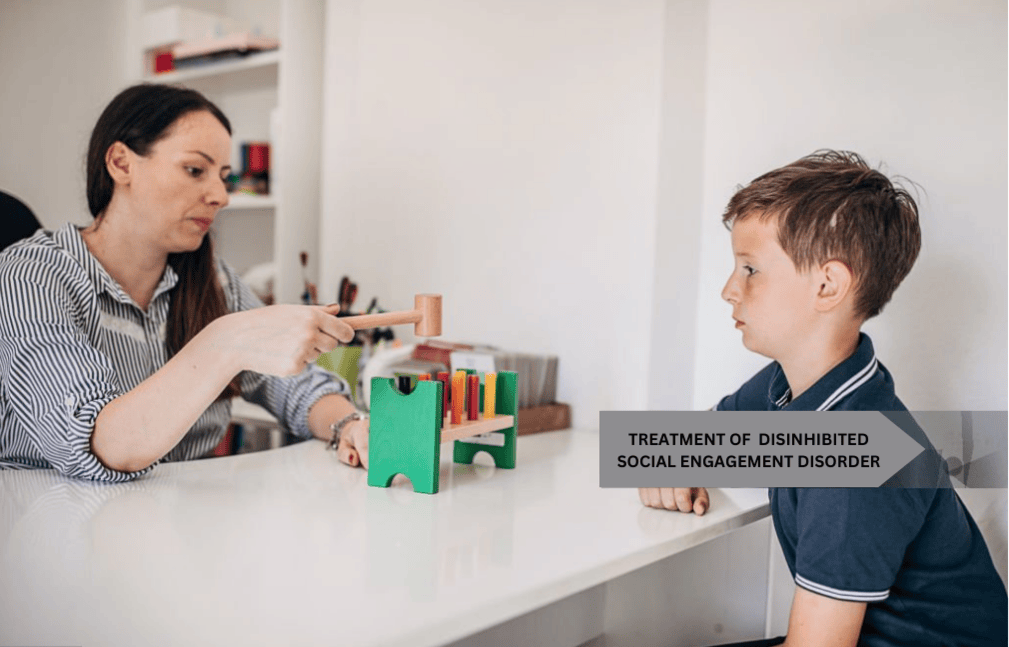
The therapist additionally assists guardians with interact with their youngsters to care for and support them to reinforce the bond. This can assist youngsters with feeling steady, safe, and adored so they heal sooner.
These youngsters need steady and reliable consideration. Kids who skip between various foster homes will be effected and not recover. The connection between the youngster and the guardian should areas of strength for be trustworthy. In addition, solid associations with teachers and friends likewise help.
Real Life Story:
So meet Jennifer who was adopted. A 6-year-old Jennifer (far left), who was taken from an Eastern European orphanage at age 4. Mary and Devid, Jennifer ‘s parents were delighted to have her as part of their family, however it was seen in the way that she only responded differently when confronted with strangers.
Their very first time in the park, Jennifer runs up to something stranger and gives them a hug shouting “Mommy! Mary and Devid stood with their mouths hanging open, looking apologetic. They told the two women that this was not their mother, but Jennifer had been terrified and clutched at them.
Jennifer ‘s actions only grew in frequency and intensity over time. She would talk to people in stores, at restaurants and on the street just like she knew them. She would also touch or embrace people she had just met.
Mary and Devid first took Jennifer to the therapist who diagnosed her with Disinhibited Social Engagement Disorder. It is common for the therapist to observe clients with DSED having trouble making such distinctions, which can result in social mistakes.
Therapist, with help from Jennifer ‘s parents helped develop some strategies to better aid her understanding and management of this behavior. She learned how to introduce herself and ask permission before touching people. They also set boundaries behave or misbehave.
Though Jennifer and her family faced many challenges, they experienced a huge turnaround. She maintained an awareness of and respect for boundaries, which served to strengthen her bond with family as well as friends.
However, setbacks occurred. While on a family vacation, Jennifer ran to the nearest stranger and said; to sit on their lap. Understandably confused, the stranger politely declined. When Jennifer found out she was crushed, felt turned down and did not know what to do.
Thus both Mary and Devid supported Jennifer through the first few weeks of homeschooling, reminding her that it was fine if things came out wrong & she did not need to do everything right or they loved her no matter what. They combined the insights learned in therapy so Emily could rebuild her self-assurance.
Jennifer ‘s story sheds some light on how difficult and long a path it is for DSED, but also the importance of early intervention and giving patience.