Bipolar I VS Bipolar II
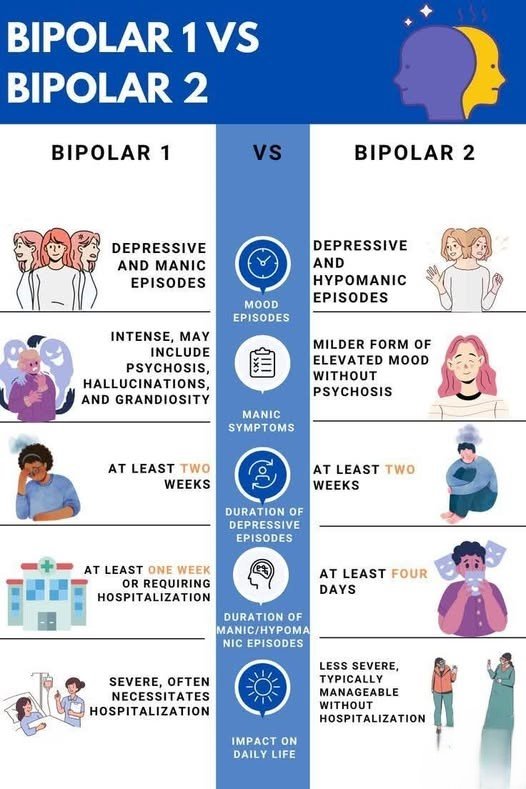
The difference between bipolar I and bipolar II disorder is that Manic episodes are the hallmark of bipolar I disorder, whereas hypomanic episodes and a major depressive episode are features of bipolar II disorder.
Depressive episodes might be more common and last longer in Bipolar II disease, despite the fact that Bipolar I is frequently regarded as more severe due to the severity of manic episodes.
A combination of medication and psychotherapy, combined with lifestyle modifications and robust support networks, can effectively manage both bipolar I and bipolar II disorders.
The majority of people occasionally experience emotional ups and downs. However, if you have bipolar disorder, you may experience extremely high or low moods.
You might occasionally feel incredibly energized or eager. At other times, you can experience a decline in your mood. Weeks or months may pass between some of these emotional highs and lows.
Bipolar disorder comes in four basic types:
- Bipolar I Disorder
- Bipolar II illness
- Cyclothymic disorder (cyclothymia),
- Other defined and unidentified bipolar disorders and associated disorders
Bipolar I VS Bipolar II
The difference between Bipolar I VS Bipolar II that both forms of bipolar disorder are characterized by mood episodes. Manic episodes are the term for the highs. Depressive episodes are the term for the low points.
Episodes of depression are not present in all forms of bipolar illness. The intensity of manic episodes is the primary distinction between Bipolar I VS Bipolar II diseases.
A manic episode will occur in a person with bipolar I, but a hypomanic episode—a period less severe than a full manic episode—will occur in a person with bipolar II.
While a person with bipolar II will have a significant depressive episode, a person with bipolar I may or may not have a depressive episode.
The intensity of symptoms is the primary distinction between bipolar I and II.
Bipolar I disorder patients may not have depressive episodes and instead have more intense highs (mania). Bipolar II patients are diagnosed with depressed episodes, even when they also experience hypomania, a less intense high.
The main distinctions are summed up in the following chart:
|
|
Bipolar I | BipolarII |
| Mania | Yes | No |
| Hypomania | Maybe | Yes |
| Depression | couldbe | Yes |
| Psychosis | More likely | Less likely |
| Hospitalization | Yes, particularly during manic episodes | Possibly during a period of depression |
| Treatment | Mood stabilizers, therapy, antipsychotics | Mood stabilizers, therapy |
Bipolar I VS Bipolar II:

Bipolar I disorder: what is it?
To be diagnosed with bipolar I disorder, you must have experienced at least one manic episode that lasted seven days or longerTrusted Source. A major depressive episode may or may not occur in a person with bipolar I illness. Hospitalization may be necessary to treat the symptoms of a manic episode.
The following are typical characteristics of manic episodes:
- high levels of energy and restlessness
- difficulties focusing and euphoric (very happy) feelings
- actions that may have negative effects
- inadequate sleep
Bipolar II disorder: what is it?
At least one hypomanic episode and a major depressive episode that lasts for at least two weeks are symptoms of bipolar II illness. Manic episodes in people with bipolar II disorder are usually not severe enough to necessitate hospitalization.
Sometimes, doctors are trusted. Since depressive symptoms may be the main symptom when a person seeks medical attention, the source misdiagnoses bipolar II illness as depression. The focus shifts to the depressive symptoms when there are no manic episodes that would indicate bipolar mental illness.
What are the differences between bipolar I and bipolar II symptoms?
As previously stated, bipolar I condition is characterized by manic periods and maybe depression, whereas bipolar II disorder is characterized by hypomania and depression. These symptoms indicate the following:
Mania:
There is more to a manic episode than a sense of exhilaration, vigor, or distraction. Mania might interfere with day-to-day activities during an episode.
Manic episodes can cause people to make “irrational” choices, such spending a lot of money they can’t afford. Additionally, they might act in ways that could be detrimental.
If an episode is brought on by external factors like drugs, alcohol, or another medical condition, it is not regarded as manic.
Hypomania:
A hypomanic episode occurs when there is less mania.Nonetheless, actions during a hypomanic episode still deviate from your typical state. People around you may notice the differences because they will be so drastic.
If an episode is induced by drugs or alcohol, it is not officially classified as hypomania.
Depression:
Bipolar disorder patients experience depression symptoms similar to those of major depressive disorder. They could involve protracted dejection and despair. Additionally, you can lose interest in activities and people you used to like hanging out with.
Other signs and symptoms include:
- fatigue and irritation
- difficulty focusing
- alterations in sleeping patterns
- alterations in eating patterns
- Suicidal thoughts
What distinguishes cyclothymia from bipolar I and II?
Another kind of bipolar disorder is cyclothymia. Although they are not as severe, highs and lows are also experienced by those with cyclothymia. Even while your moods fluctuate, they don’t fit the description of a complete bout of depression or hypomania.
The main variations in symptoms are summed up in the following chart:
| Mania | Hypomania | Depression | |
| Bipolar I disorder | Yes
|
May be | Maybe |
| Bipolar II disorder | No
|
yes | yes |
| cyclothymia | No
|
Mild, not full episode | Mild, not full episode |
How are bipolar disorders I and II treated?
Bipolar disorder is typically treated by doctors using a mix of medication and psychotherapy.
Among the medications are:
- Anticonvulsants that stabilize mood, including lamotrigine
- antidepressants
- and mood stabilizers, like lithium
Antipsychotics can also be prescribed by doctors to treat psychosis or manic episodes. Psychosis is more common in bipolar I illness, but it can occur in anyone with either form of bipolar disease.
Depending on the drug you both choose, your doctor may start you on a low dose to observe how you react. Eventually, you could require a higher dosage than what was originally recommended. To treat your symptoms, you might also require a variety of medications or a combination of them.
Every medication has the potential to interact with other drugs and cause negative effects. Before starting any new medicine, make sure to let your doctor know if you are pregnant or currently taking any other medications.
One very beneficial aspect of your treatment may be journaling. You and your doctor can determine whether treatment and medicines are effective by monitoring your moods, eating and sleeping habits, and important life events.
Your doctor might prescribe a new kind of psychotherapy or a change in your medication if your symptoms get worse or don’t get better.